What is the Incarnation?
6/28/2026Son of Promise
Why should the incarnation amaze us in every season, not just at Christmas? Working through Matthew 1 and Isaiah 7:14, we define the incarnation biblically — the eternal Son of God adding human flesh to His person — and apply this glorious truth to our worship and daily walk.
Related Teachings

The Promises of the Promised One
12/7/2025Biblical survey of Old Testament prophecies about the reason for the Christmas season.

The Holiness of God
10/3/2026What comes into your mind when you think about God? In Isaiah 6, the prophet is ushered into the throne room of the Lord and sees Him as He truly is: holy. From verses 1-5, we see five expressions of God's holiness — it is majestic, unapproachable, utterly different, the substance of His glory, and fearful — and why a right view of His holiness leaves every sinner undone and in need of a Savior.
The Nearness of God
10/3/2026Isaiah lay undone before the holy throne — and then the Lord moved. In Isaiah 6:6-7, a seraph flies to the broken prophet with a burning coal from the altar, and Isaiah hears the sweetest words a sinner can hear: your guilt is taken away, and your sin atoned for. We see that atonement comes mercifully and solely from the holy God, and that through Christ, our great High Priest, it does more than declare us innocent — it brings us near to sit at the King's table.

The Heart of True Worship
4/26/2026What stirs God's people to sing? Psalm 100 calls us to worship the Lord with joyful, heartfelt praise — not from fleeting emotion, but in response to who He is. We sing to our God, out of thankfulness to our God, and because of the nature of our God — our Good Shepherd whose steadfast love endures forever.
God's Sufficient Revelation
4/13/2026From the heavens above to the pages of Scripture, God has made Himself known. Psalm 19 reveals how creation declares His glory and how His perfect Word revives the soul, gives wisdom, and guards us from sin.
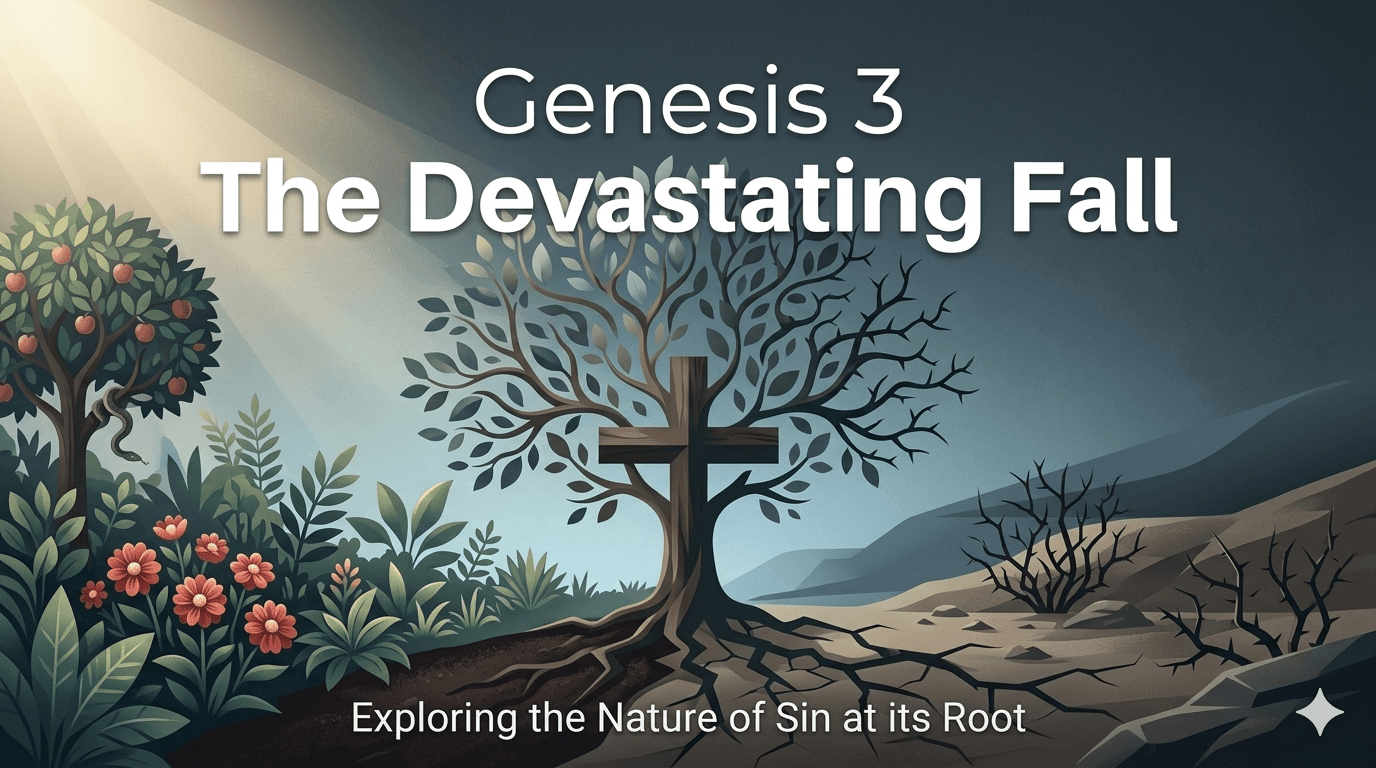
The Devastating Fall
4/7/2026Where did all the evil in our world come from? Genesis 3 reveals sin's deceitful, appealing, and devastating nature — and the hope of redemption God offers through the promised offspring, Jesus Christ.